 Musa
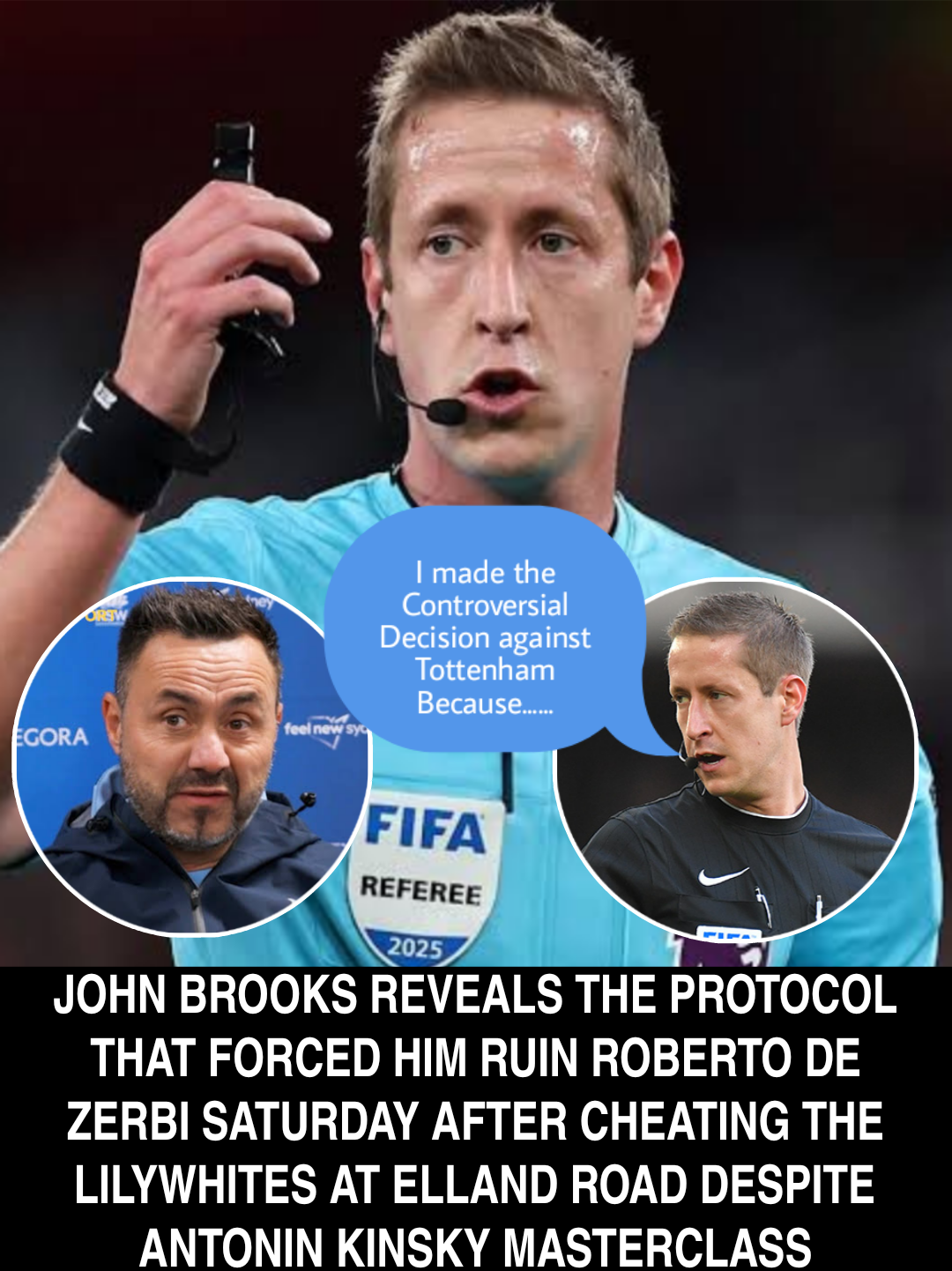
Referee John Brooks’ controversial decision not to send off Leeds United defender Jayden Bogle for his challenge on Tottenham Hotspur forward Mathys Tel has sparked considerable debate, but a closer examination of the Premier League’s disciplinary rules provides an explanation for why the official allowed the defender to remain on the pitch.
The incident, which became one of the biggest talking points during Tottenham’s meeting with Leeds United at Elland Road, attracted considerable attention after Bogle made contact with Tel around the ankle and Achilles area during a challenge for the ball.
Tottenham players immediately appealed for a red card, believing the nature of the contact was dangerous enough to warrant a dismissal. However, Brooks initially decided against showing any card, and VAR official Tony Harrington subsequently supported the on-field decision following a lengthy review.
Although the decision frustrated Tottenham supporters, the reasoning behind it centred on an important distinction within the Laws of the Game: the difference between reckless play and serious foul play.
Why John Brooks refused to send Jayden Bogle off
The most important factor behind the decision was the assessment of how Bogle entered the challenge.
According to the Premier League’s explanation of the VAR conversation, Harrington confirmed that the challenge lacked sufficient speed and that Bogle was stepping into the tackle rather than launching himself into the opponent.
The VAR explanation stated:
“I’m confirming the on-field decision of no red card. There’s a lack of speed going into the challenge and he’s stepping into the tackle. Confirming a reckless challenge.”
This was significant because a red card for serious foul play cannot be issued simply because a challenge looks uncomfortable or results in an injury.
Under Law 12, the referee must determine whether a player used excessive force or brutality, or endangered an opponent’s safety while challenging for the ball.
In Bogle’s case, the officials evidently concluded that the available footage did not demonstrate the level of force or intensity required to justify a straight red card.
Premier League rules explain the difference between reckless play and serious foul play
The International Football Association Board’s Law 12 makes an important distinction between careless, reckless and excessive-force challenges.
A careless challenge does not require disciplinary action, although a free kick may be awarded.
A reckless challenge occurs when a player acts with disregard for the danger or consequences of the challenge to an opponent. Such an offence requires a yellow card.
Serious foul play, on the other hand, involves a challenge that endangers an opponent’s safety or uses excessive force or brutality. That offence requires a red card.
This distinction is central to understanding Brooks’ decision.
The officials’ assessment was that Bogle’s challenge fell into the reckless category rather than the serious foul play category.
In other words, they did not believe the defender had committed an offence severe enough to warrant dismissal.
Why contact around Mathys Tel’s Achilles was not automatically a red card
One of the biggest arguments surrounding the incident has been the location of Bogle’s contact.
The Leeds defender appeared to make contact around Tel’s lower leg, close to the Achilles tendon, an area where dangerous challenges can have serious consequences.
However, football’s disciplinary laws do not automatically classify every contact around the ankle or Achilles as serious foul play.
The referee must consider the complete action, including the speed of the challenge, the force involved, the direction of the contact and whether the opponent’s safety was endangered.
Consequently, the fact that Tel experienced discomfort and eventually had to leave the pitch could not, on its own, determine whether Bogle deserved a red card.
The officials were required to judge the challenge itself rather than the eventual consequences.
This explains why the location of the contact, although important, was not considered sufficient to overturn Brooks’ original decision.
VAR could not find sufficient evidence to overturn the referee’s assessment
Another important aspect of the incident was the role played by VAR.
Under the Premier League’s VAR protocol, a possible red card for serious foul play is a reviewable incident. However, the technology is not intended to replace the referee’s judgement whenever supporters disagree with a decision.
VAR must establish that a clear and obvious error has occurred before recommending an intervention in a subjective decision such as serious foul play.
After examining the available footage, Harrington evidently concluded that Brooks’ original assessment was supportable.
The absence of sufficient evidence of excessive force or a dangerous lunge meant that the original no-red-card decision remained in place.
This was particularly important because the officials were not simply deciding whether Bogle had made contact with Tel. They were determining whether the challenge crossed the specific disciplinary threshold required for a straight red card.
Why John Brooks’ decision can be defended despite Tottenham’s frustration
There is little doubt that the incident looked unpleasant, particularly because of the area of Tel’s leg involved and the subsequent substitution.
Nevertheless, refereeing decisions must be based on the Laws of the Game rather than emotional reactions to an incident.
Brooks’ decision can therefore be defended on the basis that the officials considered Bogle’s lack of speed, his movement into the challenge and the absence of sufficient evidence of excessive force.
That does not mean every aspect of the incident was beyond criticism. Supporters can reasonably question whether a yellow card should have been shown, especially given VAR’s description of the challenge as reckless.
However, the distinction between a reckless challenge and serious foul play remains important.
Final verdict: John Brooks’ decision was based on the red-card threshold
Ultimately, the decision to allow Bogle to remain on the pitch was not an indication that the contact with Tel was acceptable.
Rather, the officials concluded that the challenge did not satisfy the requirements for serious foul play under Law 12.
While Tottenham supporters may continue to disagree with the outcome, the Premier League’s explanation provides a clear understanding of why Brooks’ original decision was upheld.
The controversy also highlights one of the most difficult responsibilities facing modern referees: distinguishing between a dangerous-looking challenge and an offence that legally requires a straight red card.
In this particular incident, John Brooks and the VAR team decided that Bogle’s challenge fell short of that threshold.


 Musa