 Musa
MusaTottenham Hotspur invested almost £400million on 10 new players during the summer transfer window. However, after taking into account the money generated from player departures, the club’s net spend was around £134.2million.
That figure, though, does not provide the complete picture of Tottenham’s overall financial commitments. The Lilywhites have also handed improved contracts to key players such as Micky van de Ven and Pedro Porro, while several of their summer recruits arrived on substantial salaries.
Against the backdrop of the ongoing controversy surrounding Manchester City’s financial breaches, Tottenham’s hierarchy has now offered supporters an insight into the financial pressures currently facing the club.
Vinai Venkatesham admits financial rules are limiting Spurs
Earlier this month, head coach Roberto De Zerbi revealed that financial regulations played a role in Tottenham’s failure to bring in another striker during the summer.
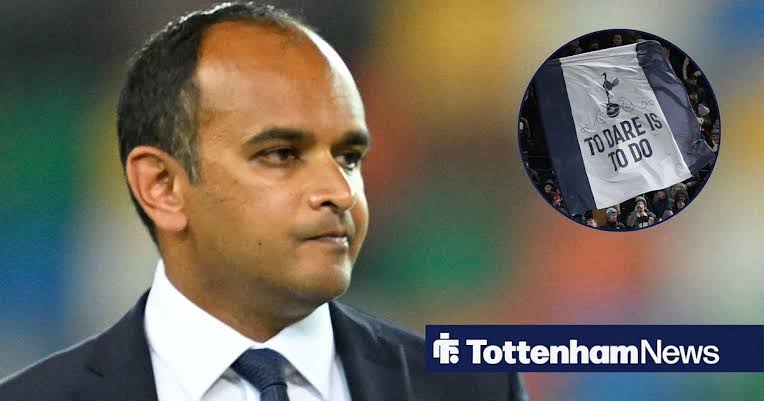
That concern was reinforced during Tottenham’s recent meeting with the Fan Advisory Board, where chief executive Vinai Venkatesham acknowledged that the club’s financial position is a significant issue.
Venkatesham highlighted the fact that Tottenham have not recorded a profit since 2019, while the club’s expenditure has continued to increase through investment in the men’s first-team squad, including wages and transfer fees.
The minutes from the meeting stated:
“VV explained that financial regulation represented a genuine constraint. The Club had not recorded a profit since 2019, and its costs were rising through investment in the Men’s team in wages and transfer fees.”
Venkatesham also pointed to Tottenham’s recent struggles on the pitch and their lack of European football as factors affecting the club’s revenue.
The meeting minutes added that successive 17th-place finishes, combined with the absence of European revenue this season, had impacted Tottenham’s financial position.
Supporter representatives also raised questions regarding the structure of the owners’ recent funding, the position of minority shareholders, the club’s debt and how financial regulations could affect Tottenham should they return to European competition.
UEFA rules could provide another financial challenge
Tottenham are currently monitoring their position against the Premier League’s financial rules, which allow squad costs of up to 85% of revenue.
UEFA’s regulations are more restrictive, with clubs required to keep squad costs within 70% of revenue. There is also a three-year profitability requirement, making financial sustainability increasingly important to Tottenham’s ambitions of returning to European competition.
Venkatesham stressed that increasing commercial revenue will therefore be crucial if Tottenham want to create more room for investment in the squad while remaining within the relevant financial regulations.
That includes generating additional income through concerts and other events hosted at the Tottenham Hotspur Stadium.
Despite the financial restrictions, Venkatesham reiterated that football remains the club’s main priority.
Tottenham remain one of Europe’s biggest spenders
Despite the perception among some supporters that Tottenham have only recently become big spenders, their transfer record over the past decade tells a different story.
Although the club operated under a relatively strict wage structure during Daniel Levy’s time as chairman, Spurs have still invested heavily in their squad.
In fact, Tottenham have recorded a net spend of approximately €1.08billion (£920million) over the last 10 years, placing them fourth among European clubs during that period.
The latest financial warning therefore comes at an interesting time for Spurs, particularly after another major summer of investment and with the club seeking to balance their ambitions on the pitch against increasingly demanding financial regulations.


 Musa
Musa