 Musa
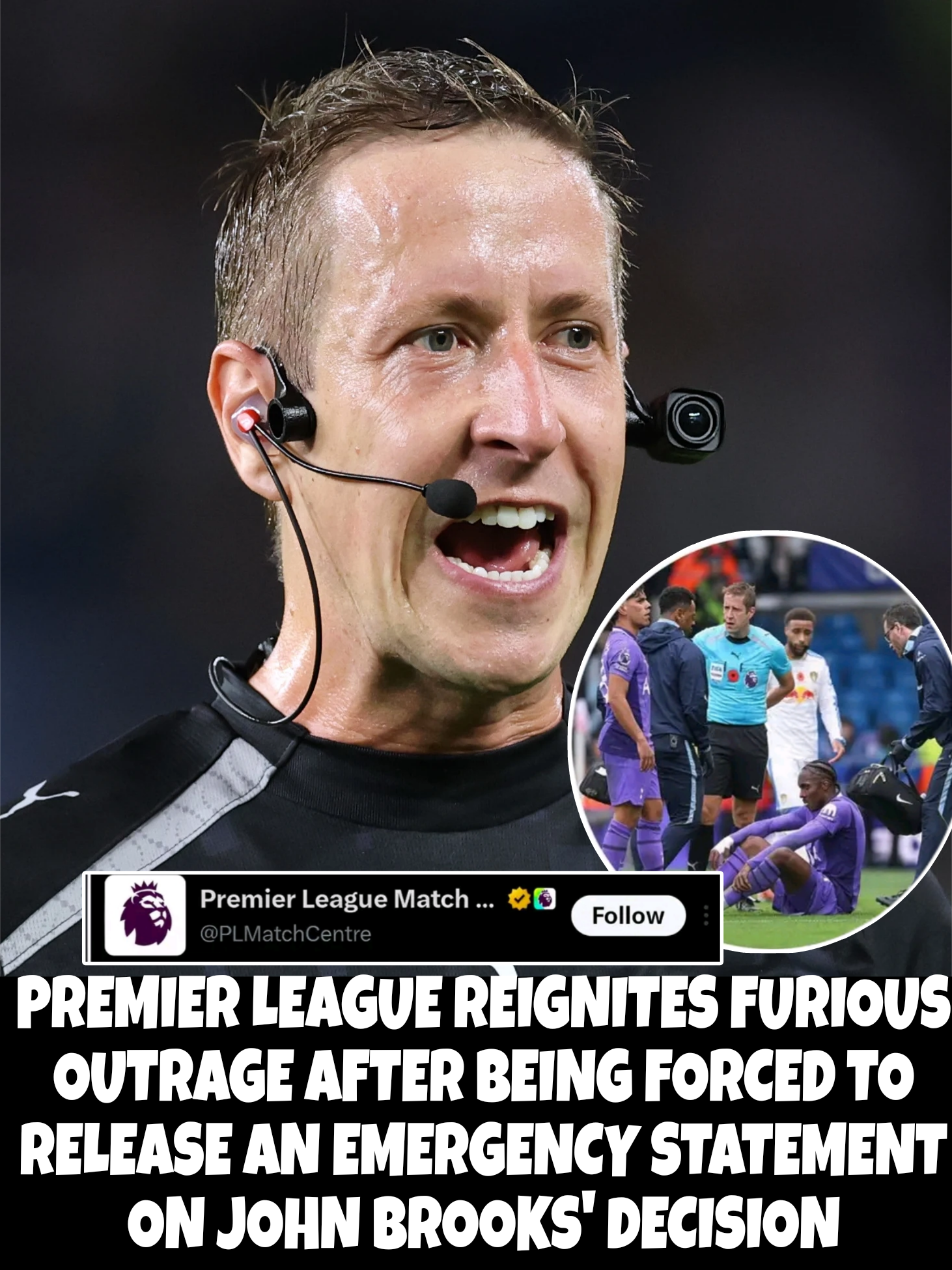
The Premier League has officially explained why referee John Brooks refused to award Leeds United a penalty after Tottenham Hotspur midfielder Mateus Fernandes became involved in a controversial handball incident during Saturday’s meeting at Elland Road.
The decision immediately attracted attention, with Leeds players and supporters convinced they had been denied a clear opportunity to take the lead after the ball appeared to strike Fernandes’ arm inside Tottenham’s penalty area.
However, despite the furious appeals, Brooks remained unmoved, and VAR official Tony Harrington subsequently supported the referee’s original decision following a review of the incident.
What made the situation particularly interesting was the explanation eventually provided by the Premier League, which confirmed that the ball had made contact with Fernandes’ arm but that the contact occurred within an area of the body where handball is not punishable.
How Mateus Fernandes escaped conceding a penalty
The incident happened just four minutes into the contest when Leeds defender Gabriel Gudmundsson delivered a dangerous cross from the left flank, attempting to find Dominic Calvert-Lewin inside Tottenham’s penalty area.
Fernandes moved across to intercept the delivery, leaning towards the ball with his arm extended as he attempted to prevent the cross from reaching its intended target.
However, the ball appeared to make contact with the upper part of his arm, immediately prompting appeals from Leeds players, who demanded that Brooks award a penalty.
The Tottenham midfielder looked fortunate from the initial television angle, particularly because his arm appeared to be away from his body while attempting to block the delivery.
Former Liverpool captain Steven Gerrard was among those who questioned the decision during the broadcast, suggesting that Fernandes had been fortunate to escape punishment.
Nevertheless, Brooks allowed play to continue, with VAR subsequently examining the incident before confirming that no penalty should be awarded.
Premier League provides official explanation for controversial decision
Following the incident, the Premier League Match Centre released an explanation detailing why the decision was considered correct.
The statement confirmed that the original decision not to award Leeds a penalty had been checked and upheld by VAR.
It also provided the explanation delivered by Harrington to Brooks during the review.
“Confirming the on-field decision of play on. The ball strikes the very top of the arm as he is leaning – in the green zone.”
This was a crucial explanation because the officials were not disputing whether the ball had made contact with Fernandes.
Instead, their assessment focused on precisely where the contact occurred.
According to the Premier League, the ball struck the very top of the midfielder’s arm, an area classified within the permitted green zone under the handball regulations.
Consequently, the officials concluded that Fernandes had not committed a punishable handball offence.
What do Premier League handball rules say about Fernandes’ situation?
Under Law 12 of the International Football Association Board’s Laws of the Game, the upper boundary of the arm for handball purposes is defined by a line in line with the bottom of the armpit.
The area below that boundary, extending towards the hand, is considered part of the arm for handball decisions.
Contact with the very top of the shoulder, above the permitted handball boundary, is not considered handball.
This distinction is important because football’s handball regulations do not automatically punish every occasion when the ball touches a player’s upper body.
The referee must establish whether the ball struck a punishable part of the arm and whether the circumstances satisfy the requirements of a handball offence.
In Fernandes’ case, VAR concluded that the contact occurred within the permitted upper-arm area.
Therefore, even though the Tottenham midfielder appeared to have his arm extended while leaning across the cross, the officials determined that the actual point of contact did not constitute handball.
Why Leeds supporters were unhappy with John Brooks’ decision
Despite the official explanation, the decision was always going to generate discussion because of the initial television images.
From the first camera angle, Fernandes appeared to extend his arm while attempting to block Gudmundsson’s cross.
That naturally created the impression that Tottenham could have conceded a penalty, particularly for supporters watching the incident in real time.
Gerrard also questioned the decision, suggesting that Fernandes had been fortunate.
However, another television angle appeared to support the officials’ interpretation that the ball had struck the very top of the shoulder rather than a punishable section of the arm.
This demonstrates one of the difficulties surrounding handball decisions in modern football: different camera angles can create entirely different impressions of the same incident.
Was John Brooks right to refuse Leeds United a penalty?
Looking at the official explanation and the relevant handball regulations, Brooks’ decision is defensible.
The important consideration was not simply that Fernandes had his arm extended, but whether the ball struck an area of the body classified as a handball offence.
VAR concluded that it did not.
If the contact occurred entirely within the permitted green zone, there was no basis for awarding Leeds a penalty simply because the midfielder was attempting to block the cross.
The decision also highlights why VAR reviews must examine the precise point of contact rather than relying exclusively on the first available television angle.
Although Leeds supporters may continue to disagree with the outcome, the Premier League’s explanation provides a clear justification for why the original decision was upheld.
Ultimately, John Brooks and Tony Harrington decided that Fernandes had not committed a punishable handball offence, allowing Tottenham to escape an early penalty scare at Elland Road.
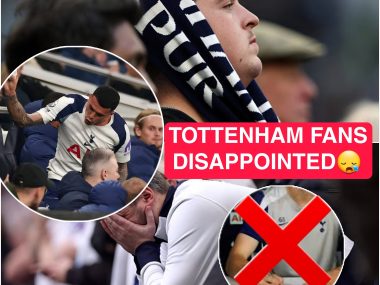
It was another significant VAR talking point in a match that would eventually see Leeds claim a 1-0 victory through Noah Okafor’s late winner.

 Musa