 Musa
MusaEverton supporters have been left debating a major refereeing decision following their dramatic 2-2 draw against Hull City at the MKM Stadium on Sunday, October 11, 2026, with Brennan Johnson’s disallowed first-half goal emerging as one of the biggest talking points of the encounter.
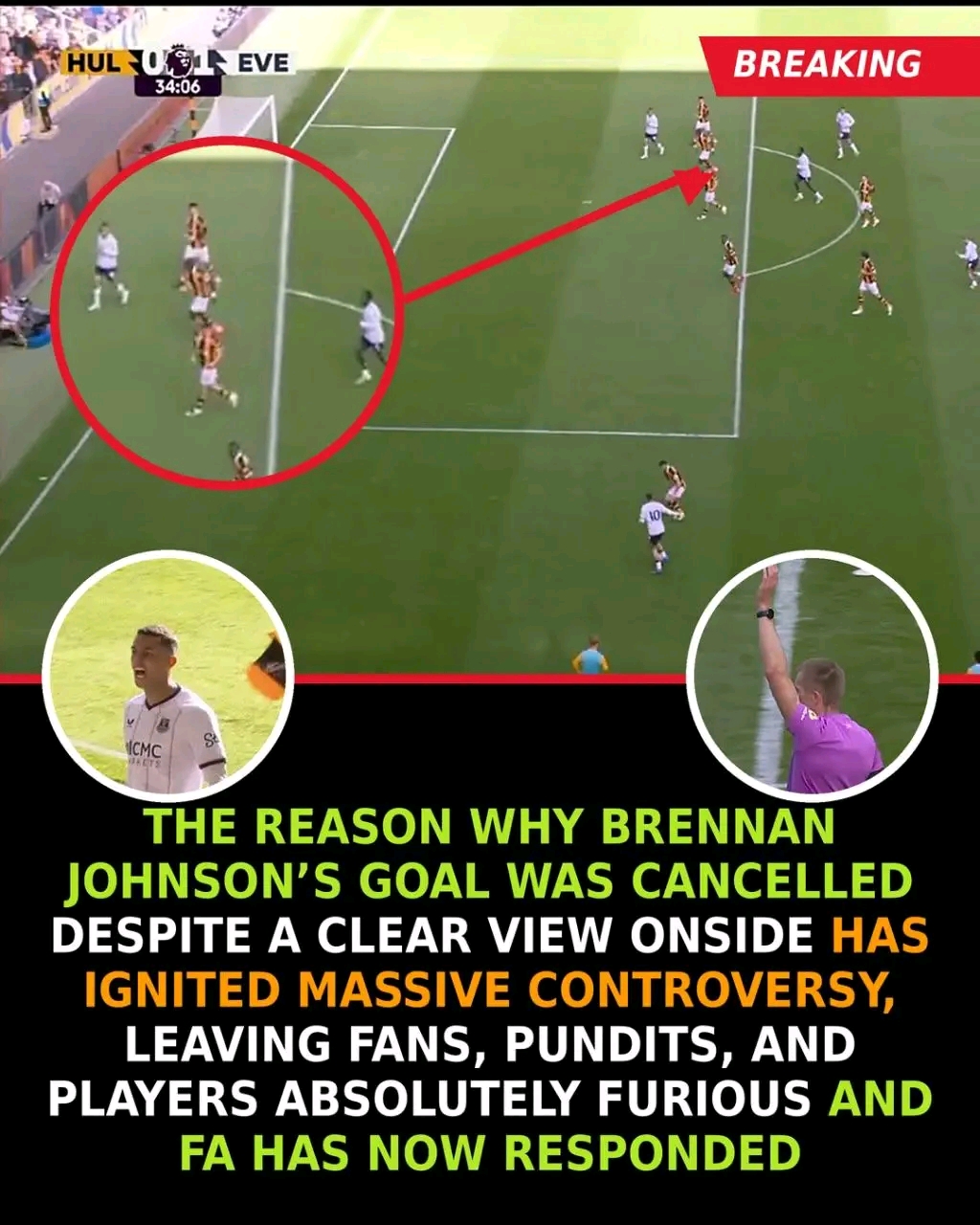
What initially appeared to be the breakthrough Everton needed was overturned following a VAR review, with referee Michael Salisbury eventually ruling that Johnson had committed an offside offence by interfering with an opponent.
The decision came during an important moment in the contest, as Everton looked to extend their unbeaten Premier League run and secure another valuable result under David Moyes.
However, the decision to disallow the goal ensured that the visitors had to wait until the second half to make their attacking pressure count, setting the stage for an entertaining encounter that eventually finished level.
VAR Controversy Overshadows Brennan Johnson’s First-Half Goal
Everton appeared to have taken the lead in the 34th minute when Johnson found the back of the net following a move involving Jack Grealish and Jarrad Branthwaite.
After the ball ricocheted inside the Hull City penalty area, Johnson reacted quickly to force it home, seemingly putting the visitors ahead.
Hull’s players immediately expressed their frustration, with questions raised about the goalkeeper’s ability to deal with the delivery and the circumstances surrounding the goal.
The incident was subsequently reviewed by the VAR team, with Timothy Wood serving as the video assistant referee.
Following the review, Salisbury was advised to examine the incident on the pitchside monitor.
The referee ultimately overturned the original decision to award the goal, ruling that Johnson was in an offside position and had interfered with Hull defender Ryan Giles.
The goal was therefore disallowed, leaving both teams level at half-time.
The decision immediately became a major talking point because it involved a goal that Everton believed had given them the advantage in a tightly contested first half.
Nevertheless, the official explanation was based on Johnson’s involvement in the play rather than simply his position when the ball entered the net.
Under the offside laws, a player can be penalised for interfering with an opponent, including by clearly obstructing an opponent’s line of vision or challenging an opponent for the ball.
The central question in such incidents is whether the player’s position and actions affected an opponent’s ability to play the ball.
What About the Claim That Johnson’s Goal Should Have Stood?
The controversy has created room for debate among supporters, particularly over whether Johnson’s presence genuinely prevented Hull’s goalkeeper from dealing with the situation.
However, it is important to distinguish fan reaction and media discussion from an official refereeing verdict.
As of the available reporting following Sunday’s match, there is no verified Premier League statement confirming that Johnson’s disallowed goal should have stood.
Consequently, claims that the authorities have officially admitted an error in the decision cannot be established from the available evidence.
The Premier League does publish assessments by its Key Match Incidents Panel, which reviews selected refereeing and VAR decisions. However, an assessment relating to an earlier match cannot automatically be treated as a verdict on the incident involving Johnson against Hull City.
For Everton supporters seeking clarification, the decisive information would be an official assessment specifically addressing Sunday’s incident.
Until such an assessment becomes available, the decision should be understood as the match officials’ on-field ruling following a VAR review, rather than a confirmed refereeing mistake.
Michael Salisbury Under the Spotlight
Salisbury was the referee responsible for the match, with Wood operating VAR.
Although the decision to disallow Johnson’s goal attracted attention, the encounter ultimately produced four goals and several significant moments that demonstrated why both teams refused to settle for a point.
Hull City had their own frustrations in the first half, while Everton were forced to respond after falling behind shortly after the interval.
The referee’s handling of the incident will naturally remain part of the post-match discussion, particularly among supporters who believe the goal should have been allowed.
However, criticism of a decision and an official finding that the referee made an error are two different things.
A definitive assessment would require an independent review of the specific incident and its application of the offside laws.
Four Second-Half Goals Produce an Entertaining Draw
Despite the first-half controversy, the match burst into life after the interval.
Hull City took the lead in the 48th minute when Joe Gelhardt capitalised on an error by Everton right-back Ainsley Maitland-Niles.
Sorba Thomas supplied the pass, allowing Gelhardt to finish confidently past Jordan Pickford and give the home supporters something to celebrate.
Everton responded seven minutes later.
Maitland-Niles recovered from his earlier mistake by delivering an excellent cross that Kiernan Dewsbury-Hall converted with a header in the 55th minute.
The visitors continued pushing forward and eventually took the lead in the 68th minute.
After Dewsbury-Hall helped create the opportunity, Thierno Barry finished past Hull goalkeeper Konstantinos Tzolakis to put Everton ahead.
Barry’s goal appeared to have given Moyes’s side the platform to secure all three points, especially after the visitors had recovered from conceding first.
Hull, however, refused to surrender.
Mohamed Belloumi came off the bench and equalised in the 74th minute, finishing with a low shot that beat Pickford.
The goal restored parity and ensured that Hull City retained their unbeaten home record since returning to the Premier League.
Neither side managed to find a decisive winner, leaving Everton to settle for a point despite taking the lead during the second half.
What the Result Means for Everton
The 2-2 draw means Everton remain unbeaten in the Premier League, providing another encouraging sign for Moyes as his side continues its campaign.
However, the result will also leave the manager with reasons to reflect on his team’s defensive concentration.
Maitland-Niles’s error contributed to Hull’s opening goal, while the visitors were unable to protect their advantage after Barry put them ahead.
Everton also created several opportunities before the break, meaning the disallowed Johnson goal was not the only significant attacking moment in a match that could have produced a different outcome.
For Hull City, the comeback demonstrated resilience and an ability to respond under pressure.
Gelhardt’s opener gave the home side momentum, while Belloumi’s equaliser ensured that their efforts were rewarded with a valuable point.
Final Verdict: More Clarity Needed on the VAR Decision
Brennan Johnson’s disallowed goal was undoubtedly one of the defining incidents of Hull City’s 2-2 draw with Everton.
The decision prevented Everton from taking the lead in the first half and placed additional importance on their response after the break.
Nevertheless, the available evidence does not establish that the Premier League has officially admitted that the goal should have stood.
Until an authoritative assessment specifically addresses the incident, claims of an official VAR error should be treated cautiously.
For Everton supporters, the debate will continue over whether Johnson’s involvement justified the intervention.
For now, the confirmed outcome remains unchanged: Hull City and Everton shared the points after a dramatic encounter featuring four second-half goals and a controversial first-half VAR decision.

 Musa
Musa