 Musa
Daniel Farke has been drawn into another heated Premier League refereeing debate after Leeds United were denied a penalty during their meeting with Tottenham Hotspur at Elland Road.
The controversial decision quickly became one of the biggest talking points of the encounter, with Leeds players and supporters questioning why a possible handball offence inside the Tottenham penalty area was not punished despite a VAR review.
For Farke, the incident provided another reminder of the frustration managers can experience when important decisions appear to go against their teams. With the Premier League increasingly relying on technology to review potentially game-changing moments, questions are once again being raised about whether VAR is delivering the clarity and consistency that clubs and supporters expect.
The incident occurred just four minutes into the match when Gabriel Gudmundsson delivered a dangerous cross into the Tottenham penalty area. As the ball travelled towards Dominic Calvert-Lewin, Spurs midfielder Mateus Fernandes moved across to intervene.
However, the ball appeared to make contact with Fernandes’ arm, immediately prompting appeals from Leeds players who believed they should have been awarded a penalty.
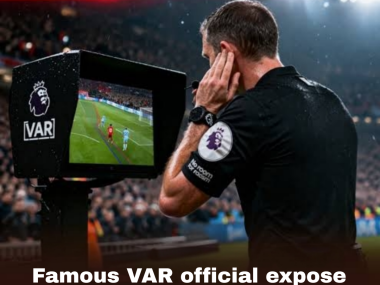
Referee John Brooks allowed play to continue, but the incident was subsequently checked by VAR official Tony Harrington. After reviewing the situation, the officials decided that there was no reason to overturn the original decision.
That outcome left Leeds frustrated, particularly because the incident happened so early in a match where a penalty could have dramatically changed the direction of the contest.
Farke’s frustration and the growing questions over VAR
The biggest issue surrounding the incident is not simply that Leeds were denied a penalty. It is the wider question of how similar handball situations are interpreted and why decisions that appear straightforward to supporters can produce such different conclusions from match officials.
From Leeds’ perspective, Gudmundsson’s delivery created a dangerous situation inside the penalty area, and Fernandes’ arm appeared to be involved in blocking the ball’s path.
The players immediately appealed, believing the contact had prevented the cross from reaching its intended destination. However, the officials reached a different conclusion after examining the available footage.
For a manager such as Farke, these are precisely the moments that can create enormous frustration. Managers spend weeks preparing their teams, studying opponents and working towards results, only for a major decision to potentially influence the outcome of a match.
Although the final decision did not automatically mean that the officials had made an error, it raised another uncomfortable question about whether the current interpretation of handball is sufficiently clear for everyone involved.
PGMOL’s explanation fails to end the debate
Following the incident, the Premier League Match Centre explained that the ball had struck the very top of Fernandes’ arm while he was leaning. The contact was considered to have occurred within the permitted upper-arm area commonly described as the ‘green zone’.
Under the handball regulations, contact with the uppermost part of the arm, close to the shoulder, does not automatically constitute an offence. The precise location of the contact and the circumstances surrounding the player’s movement are important when determining whether handball should be punished.
This was the explanation behind the decision to allow play to continue.
However, the explanation has not completely settled the debate. Supporters have continued to question Fernandes’ arm position and whether the circumstances of the incident deserved closer scrutiny.
Former Liverpool captain Steven Gerrard also questioned the decision during TNT Sports coverage, suggesting that Fernandes had been fortunate to escape punishment.
That reaction illustrates why the incident has attracted so much attention. Even when officials provide an explanation, supporters and former professionals can still disagree with how the relevant law has been applied.
For Leeds, the concern is whether the review process is consistently identifying the incidents that genuinely deserve intervention.
Another controversial VAR moment involving Jayden Bogle
The Fernandes handball appeal was not the only major refereeing talking point from the encounter.
Jayden Bogle’s challenge on Tottenham forward Mathys Tel also generated considerable controversy after the Leeds defender escaped a straight red card following a VAR review.
Tel appeared to suffer a painful challenge around the ankle and Achilles area, prompting immediate concern from Tottenham players and supporters. There were calls for referee John Brooks to dismiss Bogle, but the officials ultimately decided that the challenge did not meet the threshold for a straight red card.
The explanation surrounding the challenge focused on the nature of the contact, including the speed and force involved and the defender’s movement into the tackle.
Under the laws of the game, a dangerous challenge can be considered serious foul play when it endangers an opponent’s safety or uses excessive force or brutality. However, not every painful or reckless challenge automatically qualifies for a red card.
Nevertheless, the decision created another major discussion about the consistency of VAR intervention. With the handball appeal and the Bogle challenge both attracting scrutiny, Leeds and Tottenham supporters were left debating the standard of officiating throughout the match.
Why the controversy matters for Leeds United
Leeds eventually secured a 1-0 victory through Noah Okafor’s late winner, meaning the controversial decisions did not prevent Farke’s team from collecting the points.
However, the result does not make the wider refereeing debate irrelevant.
For managers, consistency is one of the most important expectations when it comes to officiating. Clubs want to know that the same laws will be applied in comparable situations, regardless of the teams involved or the importance of the fixture.
VAR was introduced to reduce clear and obvious mistakes, but situations such as the Fernandes handball appeal demonstrate how much interpretation remains involved in certain decisions.
The technology can provide different camera angles and slow-motion replays, but it cannot remove every disagreement about what constitutes an offence. Ultimately, the final decision still depends on the officials’ interpretation of the laws.
That is why PGMOL continues to face questions whenever a controversial decision attracts widespread attention.
For Farke, the important issue will be ensuring that Leeds receive the same standard of decision-making as every other Premier League club. The German manager and his players will want to focus on their performances, but they will also expect important incidents to be judged consistently.
The officials may have stood by their interpretation of the handball law, yet the reaction at Elland Road shows that the explanation has not ended the argument.
And with another contentious VAR decision dominating discussions after a Premier League fixture, the debate over refereeing consistency looks set to continue.


 Musa