 Musa
Tottenham Hotspur’s disappointing defeat to Leeds United has sparked fresh questions about the team’s mentality, attacking quality and the growing frustration surrounding Roberto De Zerbi’s side, with Mohammed Kudus emerging as one of the biggest talking points after another underwhelming performance.
After enjoying three consecutive Premier League victories against Coventry City, Chelsea and Crystal Palace, Spurs travelled to Elland Road hoping to extend their revival and strengthen their position in the race for European qualification. Instead, they suffered a frustrating 1-0 defeat, with Noah Okafor’s 79th-minute strike ending their impressive run.
However, beyond the result itself, there were several moments that left Tottenham supporters questioning what went wrong, particularly the team’s lack of attacking urgency and the apparent inability of some senior players to make a meaningful contribution when the pressure increased.
And while much of the post-match discussion has centred on the controversial Jayden Bogle challenge on Mathys Tel, another issue has attracted attention: the disappointing body language and lack of urgency displayed by Tottenham’s attacking players.
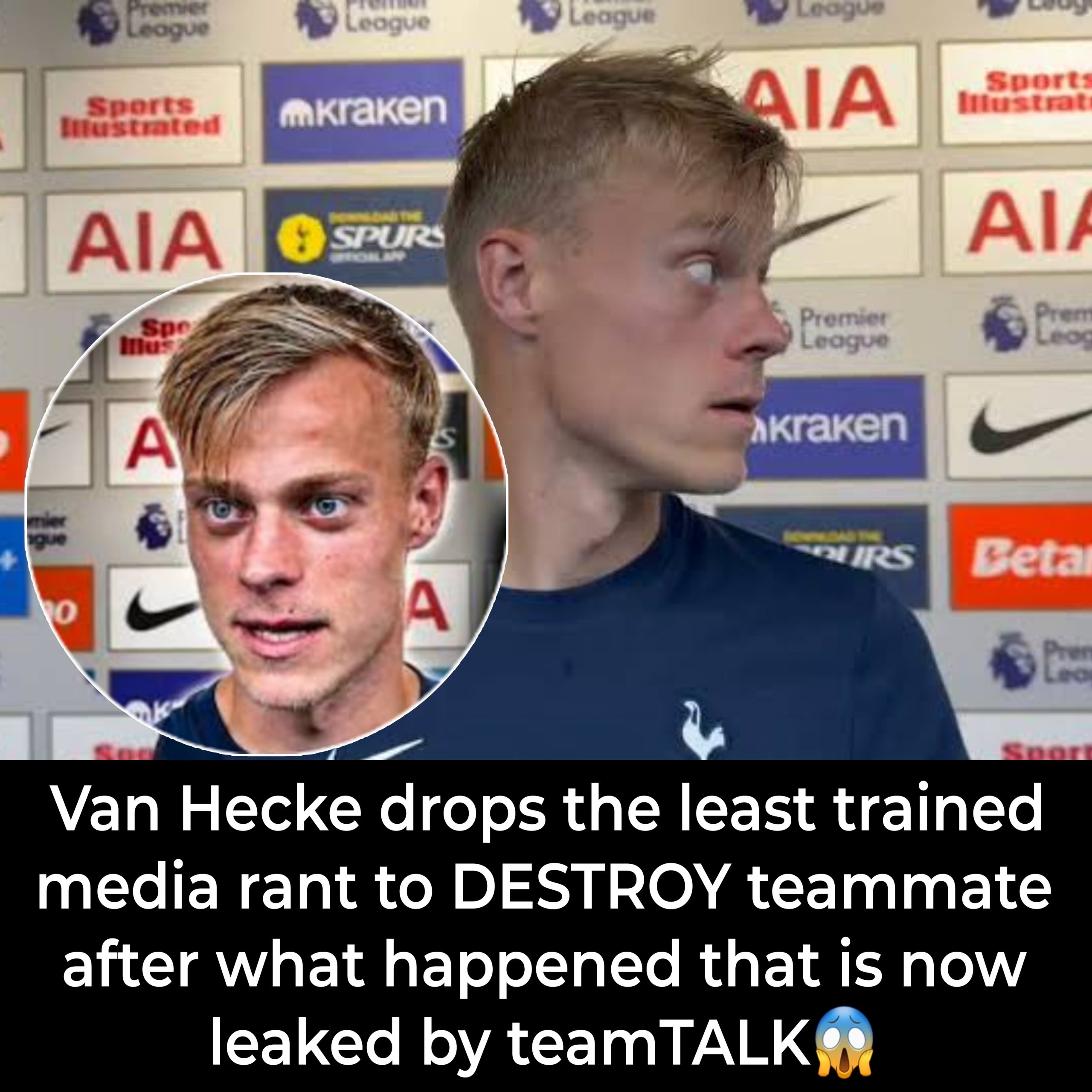
Van Hecke’s alleged criticism adds another layer to Tottenham’s frustration
The headline surrounding Van Hecke’s involvement has raised questions about the atmosphere within Tottenham’s dressing room, particularly after the disappointing performance against Leeds.
However, there is currently no verified evidence in the supplied match report that Van Hecke confronted, criticised or publicly attacked a Tottenham player. His involvement should therefore not be presented as a confirmed dressing-room incident.
What is clear, though, is that Tottenham have reasons to be concerned about the performances of their attacking players, with Mohammed Kudus facing increasing scrutiny.
The Ghanaian international was expected to provide creativity, direct running and attacking inspiration, but his display at Elland Road left plenty to be desired.
Kudus struggled to win his individual battles, losing ten of his 13 attempted duels. His delivery was equally disappointing, completing just one of seven attempted crosses into the penalty area.
For a player expected to make a difference in difficult matches, those statistics paint a worrying picture.
The AWFUL gesture that has raised questions about Tottenham’s defeat
One of the biggest talking points from the encounter was Tottenham’s apparent lack of urgency when trying to turn the game around.
Despite falling behind to Okafor’s late goal, Spurs struggled to produce the attacking response required to rescue something from the match.
Their attacking approach lacked the intensity supporters had witnessed during their previous three victories.
There was little evidence of the coordinated movement, aggressive pressing and willingness to take risks that had helped De Zerbi’s side rediscover their confidence.
This is where the discussion about body language becomes particularly important.
Supporters expect their players to demonstrate hunger and determination, especially when the team is chasing an important result. When performances appear passive, frustration inevitably follows.
It would be unfair, however, to identify a particular gesture as the reason Tottenham lost without clear evidence of what happened.
The more obvious explanation was their failure to create enough meaningful opportunities and their inability to prevent Leeds from capitalising on a defensive lapse.
Mohammed Kudus faces an uncomfortable situation after another poor display
Perhaps the biggest selection question De Zerbi must consider during the international break concerns Kudus.
The former West Ham attacker has considerable ability, but his performances have not consistently reflected his reputation.
Against Leeds, he managed just one created chance before being substituted for Luca Williams-Barnett.
His struggles were particularly noticeable because Tottenham needed somebody capable of taking responsibility and producing something different in the final third.
Instead, Leeds were able to contain much of Spurs’ attacking threat.
With Savio approaching a return to contention and Dejan Kulusevski also providing another attacking option, Kudus cannot afford to assume that his starting position is guaranteed.
Williams-Barnett’s introduction also offered De Zerbi another reason to reconsider his attacking combinations.
The young forward has the potential to become an important player, and giving him more opportunities could provide the attacking freshness Tottenham desperately need.
De Zerbi has a serious problem to solve before Tottenham return
Ultimately, the defeat at Elland Road exposed problems that cannot simply be blamed on one controversial refereeing decision.
The decision not to punish Bogle more severely for his challenge on Tel will understandably remain a source of frustration for Tottenham supporters.
However, Spurs must also accept responsibility for their performance.
Creating only 0.56 expected goals after the interval was never going to be enough to guarantee a comeback against a Leeds side determined to protect their advantage.
De Zerbi now faces important decisions regarding his attacking personnel, particularly whether Kudus deserves to retain his place in the starting XI.
Tottenham have shown that they can produce impressive performances under their new manager, but victories against Coventry, Chelsea and Crystal Palace will count for little if they cannot maintain that standard consistently.
The international break offers an opportunity to reassess the situation.
And when Tottenham return, supporters will be expecting a response, not another performance that raises more questions about the team’s mentality and attacking quality.


 Musa